Zero Trust Network Security: Why 'Never Trust, Always Verify' Is the New Standard for Business Networks
Zero Trust Network Security: Why 'Never Trust, Always Verify' Is the New Standard for Business Networks
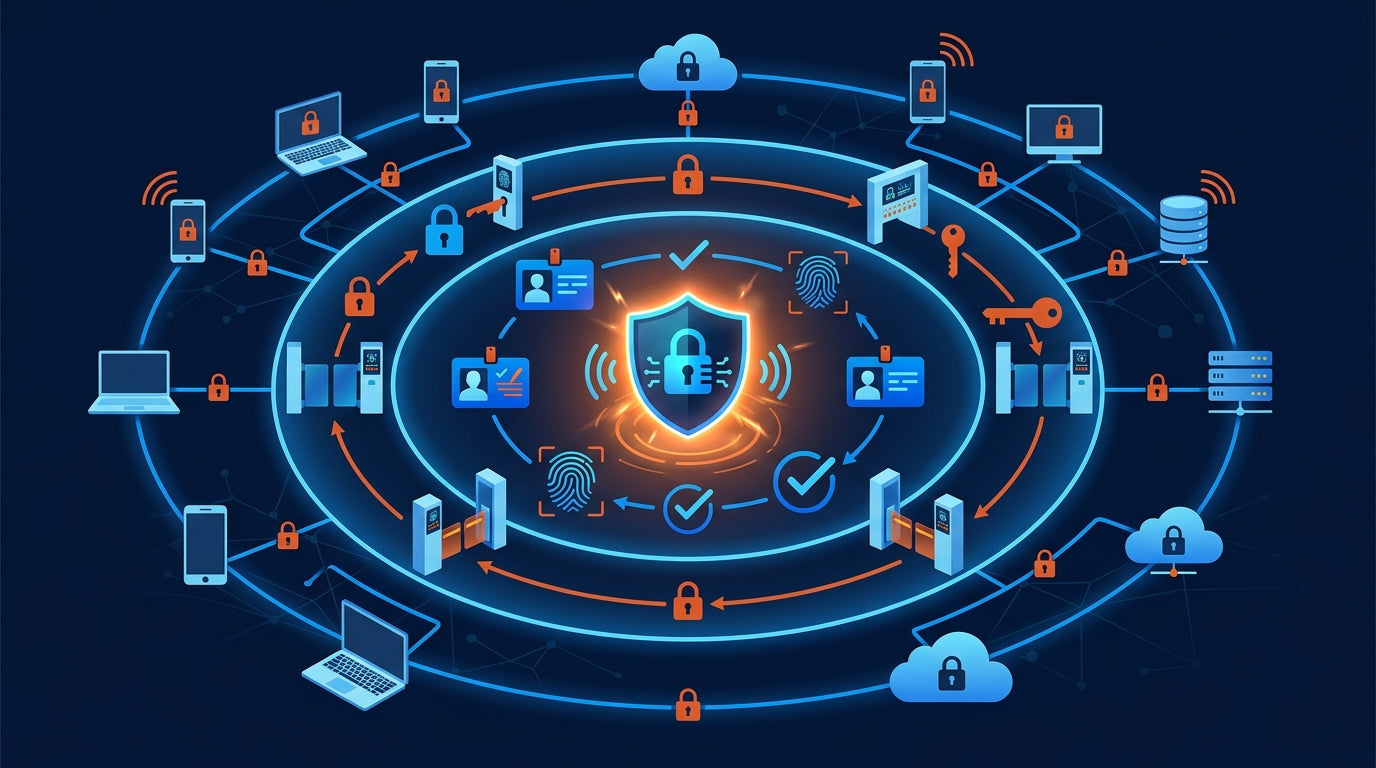
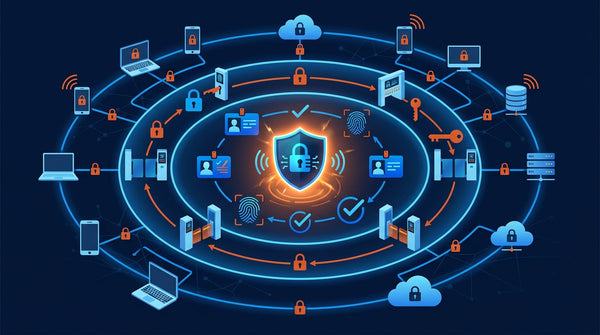
The traditional approach to network security — building a strong perimeter and trusting everything inside it — is no longer enough. With remote workers connecting from home networks, cloud applications spanning multiple data centers, and IoT devices multiplying across every office floor, the network perimeter has effectively dissolved. That's why forward-thinking businesses are adopting a Zero Trust security model: the principle that no user, device, or application should be automatically trusted, regardless of where it connects from.
For small and mid-sized businesses, Zero Trust might sound like an enterprise-only concept reserved for Fortune 500 security teams. But with Cisco Meraki's cloud-managed platform, implementing Zero Trust principles is not only achievable — it's remarkably straightforward.
"Cisco's own Zero Trust journey has unlocked $3.4 million in annual productivity savings and prevented 86,000 security incidents — proving that stronger security and better user experience aren't mutually exclusive."
What Is Zero Trust — and Why Does It Matter Now?
Zero Trust is a security framework built on one core principle: never trust, always verify. Instead of assuming that devices inside your network are safe, Zero Trust requires continuous authentication, authorization, and validation of every user and device attempting to access resources — every single time.
This matters more than ever because the threats businesses face have fundamentally changed. Ransomware attacks increased dramatically in recent years, phishing campaigns are more sophisticated than ever, and a single compromised employee laptop can give attackers a foothold to move laterally across your entire network. A perimeter-only approach leaves you vulnerable the moment an attacker gets past the front door.
Zero Trust closes that gap by enforcing security at every layer:
- ✓ Identity verification — Every user proves who they are before accessing anything
- ✓ Device trust — Only compliant, healthy devices get network access
- ✓ Micro-segmentation — Network zones limit lateral movement if a breach occurs
- ✓ Continuous monitoring — Access is re-evaluated in real time, not just at login
- ✓ Least-privilege access — Users only reach the resources they actually need
How Meraki Makes Zero Trust Practical for Every Business
Cisco breaks Zero Trust into four essential functions: establish trust, enforce trust-based access, continuously verify trust, and respond to changes in trust. Meraki's cloud-managed architecture maps cleanly to each of these, giving businesses of any size the tools to implement a robust Zero Trust posture without a team of security engineers.
Network Segmentation Made Simple
One of the foundational pillars of Zero Trust is network segmentation — dividing your network into isolated zones so that a breach in one area can't spread to others. With Meraki MX security appliances, you can create granular firewall rules, VLANs, and group policies that restrict traffic between segments. A compromised guest device can't reach your finance servers. A point-of-sale terminal stays isolated from your corporate email.
Meraki's cloud-managed switches extend this segmentation to the access layer with dynamic VLAN assignment, port-level security, and adaptive policies that automatically classify devices and apply the right security posture — no manual switch configuration required.
Wireless Access With Built-In Trust Verification
Your wireless network is often the first point of entry for both employees and potential threats. Meraki wireless access points support enterprise-grade authentication methods including 802.1X RADIUS integration, certificate-based authentication, and splash page captive portals. Combined with the Meraki dashboard's client fingerprinting and device profiling, you get visibility into exactly what's connecting to your network — and can automatically quarantine anything that doesn't meet your trust requirements.
Secure Remote Access Without VPN Headaches
Traditional VPNs grant broad network access once connected — the opposite of Zero Trust. The Meraki Z4C teleworker gateway takes a different approach: it extends your corporate security policies to remote workers' home offices while giving IT full dashboard visibility. Auto VPN creates encrypted tunnels automatically, and split-tunnel policies ensure only corporate traffic traverses the VPN — keeping personal traffic separate and reducing bandwidth overhead.
Continuous Visibility: The Dashboard Advantage
You can't enforce Zero Trust if you can't see what's happening on your network. This is where the Meraki cloud dashboard becomes indispensable. From a single pane of glass, IT teams can monitor every connected client, review traffic patterns, identify anomalous behavior, and respond to threats in real time — across every site, from anywhere.
Key visibility features that support Zero Trust:
- ✓ Client device inventory — See every device, its OS, its connection history, and its current status
- ✓ Traffic analytics — Understand application usage patterns and spot unusual data flows
- ✓ Automated alerts — Get notified instantly when a device fails a compliance check or behaves abnormally
- ✓ Group policy enforcement — Apply or revoke access policies across thousands of devices in seconds
- ✓ Integration with Cisco Umbrella — Extend protection to DNS-layer security and content filtering
Getting Started: A Practical Zero Trust Roadmap
Implementing Zero Trust doesn't require ripping out your existing infrastructure. With Meraki, you can adopt it incrementally:
- ✓ Phase 1 — Visibility: Deploy Meraki across your network to gain full visibility into who and what is connecting. You can't protect what you can't see.
- ✓ Phase 2 — Segmentation: Use MX appliances and MS switches to create network segments that isolate critical systems from general traffic.
- ✓ Phase 3 — Authentication: Enforce 802.1X and certificate-based authentication on wireless and wired connections. Implement group policies based on user identity.
- ✓ Phase 4 — Continuous enforcement: Enable automated threat detection, anomaly alerts, and adaptive policies that respond to changes in device trust in real time.
The beauty of the Meraki platform is that each phase builds on the last, and every component is managed from the same cloud dashboard. There's no separate management console for switches vs. firewalls vs. access points — it's all unified, which dramatically reduces complexity and the risk of security gaps between systems.
Ready to bring Zero Trust security to your business without the enterprise complexity? Explore Meraki's full range of security appliances and see how cloud-managed networking makes stronger security achievable for organizations of every size.
Since deploying Meraki security appliances, we have blocked over 10,000 threats per month automatically. Our team sleeps better at night knowing the network defends itself.
Why Businesses Trust Meraki Security
Enterprise-grade threat protection that deploys in minutes and manages itself from the cloud.
Advanced Threat Protection
Next-gen firewall with intrusion detection, malware filtering, and Cisco Talos threat intelligence built into every MX appliance.
Learn More ›Automated VPN
Site-to-site and client VPN configured in clicks, not hours. Auto VPN creates secure tunnels between locations with zero manual configuration.
Learn More ›Content Filtering
Granular web filtering, geo-IP blocking, and application-layer controls keep your network safe and compliant without extra hardware.
Learn More ›The Power of the Meraki Dashboard
At the heart of Cisco Meraki is an intuitive cloud dashboard that unifies wireless, switching, security, and IoT management into a single view. IT teams can manage their entire distributed infrastructure from anywhere.
- Real-time visibility into network health and client connectivity
- AI-powered analytics that predict issues before they impact users
- Automated firmware updates and security patching
- Role-based access control and audit logging

We replaced three separate security vendors with one Meraki MX appliance per site. Simpler to manage, better protection, and half the cost.
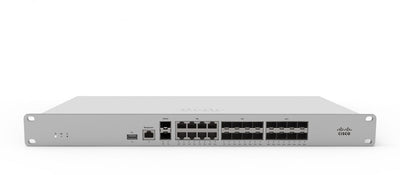
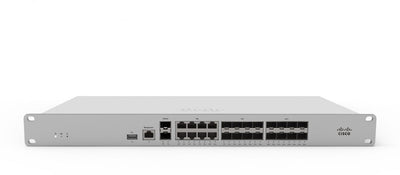
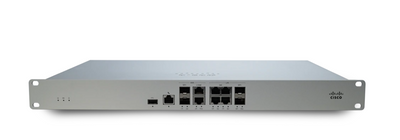
Featured Security Products
Protect your network with these Cisco Meraki security appliances.
Seamless Integration with Your IT Stack
Meraki works alongside the collaboration, security, and productivity tools your team depends on.
- VPN integration with major identity providers
- SAML and RADIUS authentication support
- MDM and endpoint management compatibility
- Open APIs for custom automation workflows
This article was originally published on meraki.deal, the Novbox Cisco Meraki online store.


Comments
Post a Comment